Blogs
How to Increase Ecommerce Conversion: What Enterprise Brands Do Differently



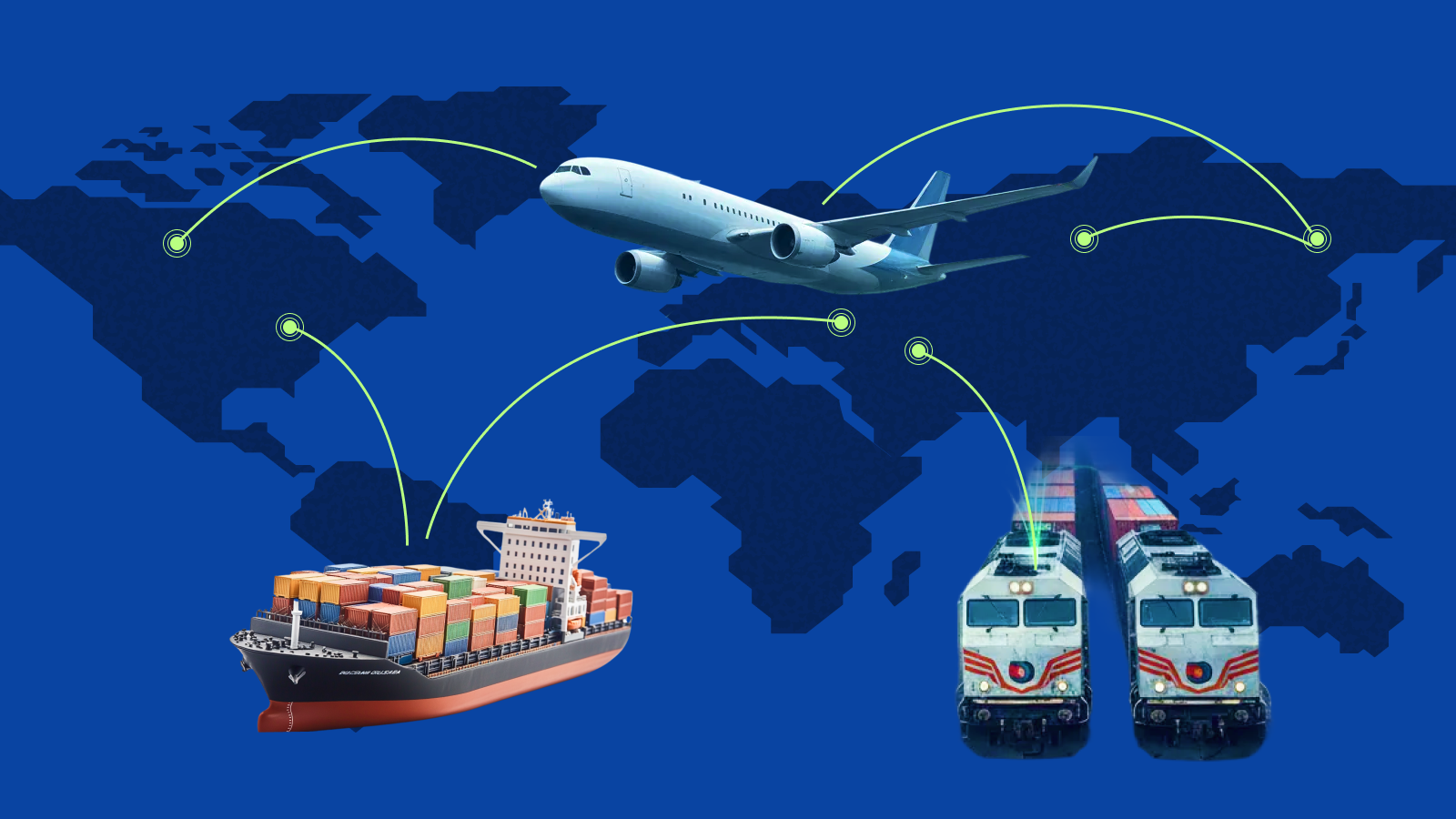

Global logistics aren’t working the way they used to. Sea freight is clogged. Air freight is expensive. Rail is under-used but holds untapped potential. Reliance on a single mode leaves your fulfillment vulnerable — and your margins exposed.
For ecommerce brands scaling their existing international operations, that means you must rethink routing.
Single-mode strategies expose global ecommerce to three major risks: cost, speed and disruption.
Multimodal logistics is the coordinated movement of goods using two or more transport modes — typically air, sea, and rail — under one unified management system.
Unlike intermodal shipping, which treats each leg separately, multimodal logistics runs on a single contract and oversight layer. That means one operator handles every mode, schedule, and document involved in the shipment.
How it works:
Why it matters:
Global ecommerce needs both speed and resilience. Multimodal logistics enables rerouting when disruption hits — shifting from sea to rail if a port closes, or from air to truck if costs spike. This flexibility creates a network that adjusts instead of stalls.
Multimodal logistics optimize routes by combining transport modes for measurable efficiency gains. Operators can design integrated routes that balance cost, speed, and reliability — without relying on one channel.
Takeaway:
Multimodal logistics let ecommerce operators reduce transit times, control freight costs, and improve reliability — all verified through independent global data sets.
For DTC and enterprise ecommerce brands, multimodal logistics act as a structural advantage. They help teams optimize speed, cost, and resilience simultaneously.
1. Lower total landed cost.
Mixing transport modes lowers freight spend by 10 – 25 %, according to the World Bank’s 2023 Logistics Performance Index.
By routing bulk freight through slower, cheaper legs and time-sensitive goods through faster corridors, brands achieve cost efficiency without sacrificing delivery speed.
2. Faster replenishment and inventory flow.
Multimodal setups cut lead times by 15 – 40 %, which improves stock rotation and reduces the likelihood of stock-outs in key overseas markets.
This agility is especially valuable during peak retail periods when port congestion or air-capacity limits delay competitors still locked into single-mode shipping.
3. Improved reliability.
Markets using multimodal networks show stronger on-time delivery rates — up to 20-point gains in reliability compared with single-mode operations (World Bank LPI 2023).
Brands can meet delivery promises more consistently, strengthening customer experience and retention.
4. Built-in resilience.
When disruptions hit — weather, strikes, or capacity squeezes — the flexibility of a multimodal logistics setup can keep cargo moving.
5. Sustainability gains.
UNCTAD’s Review of Maritime Transport 2023 notes that sea-rail combinations emit significantly less CO₂ than equivalent all-air routes.
For brands with sustainability mandates, optimizing transport mix directly supports carbon-reduction targets.
One network. Unified control.
OpenBorder connects ecommerce brands to multimodal shipping routes through its integrated carrier and warehouse ecosystem.
Result:
Brands expanding across markets reduce lead time, lower shipping costs, and gain full operational transparency — creating a scalable foundation for international growth.