

Blogs
How to Increase Ecommerce Conversion: What Enterprise Brands Do Differently

Most brands send one generic reminder. The ones recovering high-value orders send a system.
A DTC skincare brand recovering 8% of abandoned carts across their US store was seeing 2% recovery from the same sequence sent internationally. Same products. Same offers. The emails were written entirely for a US customer; USD pricing, domestic return policy, no localization. International buyers did not need a reminder. They needed the friction removed first.
Abandoned cart recovery is a sequence problem, a personalization problem, and increasingly, a market-specific problem. The 12 examples below cover the approaches that actually move the needle.
In this article:
Three things separate high-performing sequences from noise:
Most brands have the first email. Fewer have the full sequence. Almost none have localized variants for international customers — the segment where abandonment rates run highest.
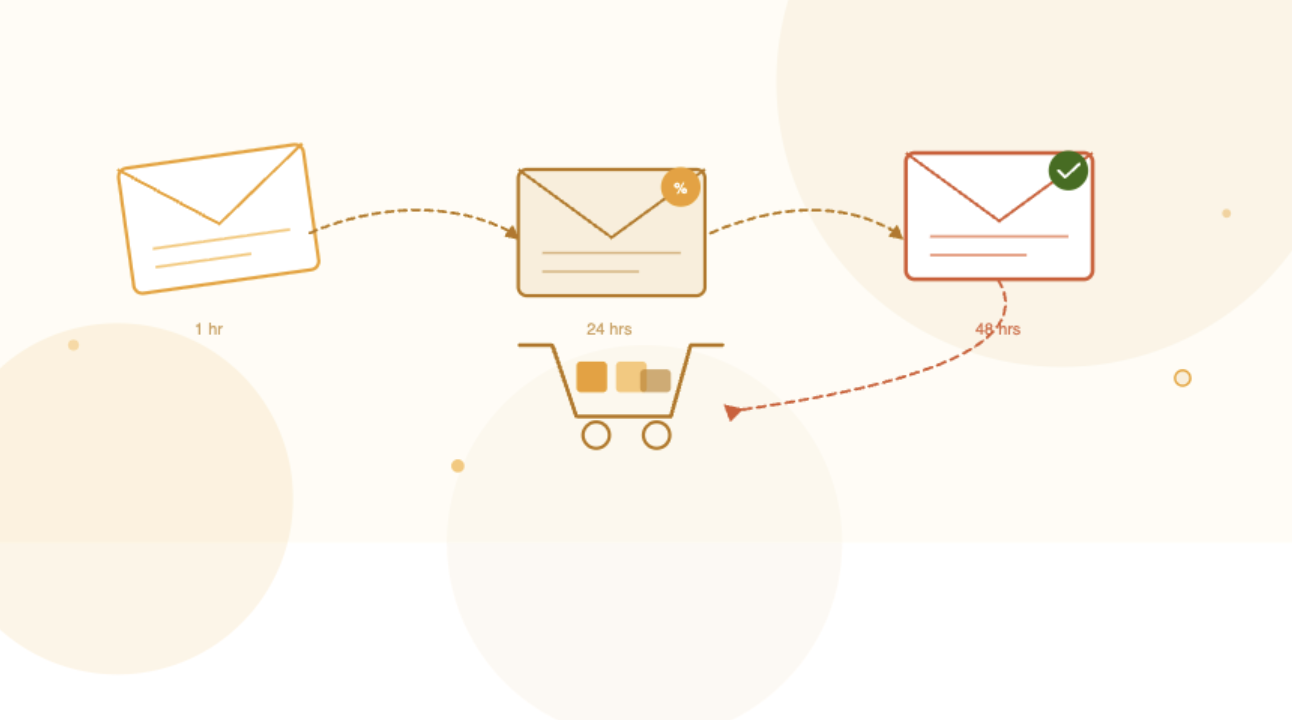
Sent within 60 minutes. Subject line names the product. Short body: product image, name, price, one CTA. No discount, no urgency. Recovery rate at this send time is high enough that discounting is unnecessary — and trains customers to abandon intentionally.
Second email, 24 hours later. Anticipates why they left: shipping cost, returns policy, delivery time. Address the most common objection for that product category directly. A supplement brand might address customs. A skincare brand might address returns.
Third email, 48-72 hours after abandonment. Two or three customer reviews about the specific product in the cart. No discount needed — let the reviews work. Most effective for high-AOV products where trust is the barrier.
Only use when inventory is genuinely limited. "Only 3 left" when there are 300 left destroys trust. When stock actually is limited, a single honest low-stock notice converts high-intent buyers fast.
Email 1: no discount. Email 2: no discount, objection handling. Email 3: 10% off or free shipping. Holding the discount for email 3 protects margin on customers who would have converted anyway.
For orders above $150, a discount signals the brand lacks confidence. High-AOV recovery emails perform better with upgraded social proof — video testimonials, press mentions, before/after results — than with 10% off.
Email at one hour, SMS at three hours, email at 24 hours. For brands with SMS consent, adding a text to the sequence lifts recovery rate meaningfully. The SMS should be short: product name, one link, no hard sell.
"[First name], your [product name] is waiting." Outperforms "you left something in your cart" on open rates consistently. The product name is the hook.
For products commonly purchased with a complement: show the bundle. "Complete the routine" or "most customers also add [X]" recovers the cart and increases AOV in one send.
For customers who abandoned and did not convert through the standard sequence, a 30-day email with a time-limited offer recovers a meaningful revenue tail. Works best with seasonal framing.
Triggered when a customer views a product page multiple times without adding to cart. Lower pressure than a standard cart recovery — "still thinking about [product]?" — because intent is softer.
Identical to your best-performing US sequence, localized per market. UK customers see GBP pricing and UK delivery estimates. Canadian customers see CAD. More on this below.
International customers abandon at higher rates and recover at lower rates from standard sequences. The cause is almost always checkout friction, not lack of interest.
A customer in Australia who sees USD pricing, a $39 shipping line, and a "10-21 business days" window does not need a reminder email. The friction needs to be resolved at checkout first.
For brands with meaningful international traffic, localized abandoned cart sequences should be treated as a separate workstream. That means local currency in the email body, market-specific delivery estimates, and a returns statement that reflects international return options.
Bloom Nutrition — a nine-figure supplements brand — recorded a 40% increase in international conversion rate within 30 days of fixing their checkout infrastructure and localizing their market communication. Their international revenue tripled within 12 months. (OpenBorder / Bloom Nutrition case study)
Brands that localize sequences for their top international markets typically recover within 3-5 percentage points of their domestic rate.
If you are sending one abandoned cart email, set up a three-email sequence before testing anything else.
Splitting by market almost always reveals that international recovery is significantly underperforming domestic.
If you are currently offering a discount in email 1, test delaying it with no other changes. Margin improvement is often immediate.
Within one hour of abandonment. Recovery rates drop significantly after the first two hours. Klaviyo's 2024 benchmark data shows one-hour sends outperform next-day sends by a wide margin across most product categories.
Three. One within an hour (no discount), one at 24 hours (objection handling or social proof), one at 48-72 hours (optional discount). A single email underperforms a three-part sequence by 2-3x on recovered revenue.
No. Test holding the discount for email 3 — many customers convert before seeing it. Leading with a discount trains customers to abandon intentionally.
International abandonment is usually driven by checkout friction: USD pricing, high shipping costs, vague delivery windows, or unclear returns policies. A recovery email cannot fix these — they need to be resolved at checkout first.
Product-specific subject lines outperform generic ones. "[First name], your [product name] is waiting" consistently outperforms "you left something behind" on open rates.