Blogs
How to Increase Ecommerce Conversion: What Enterprise Brands Do Differently



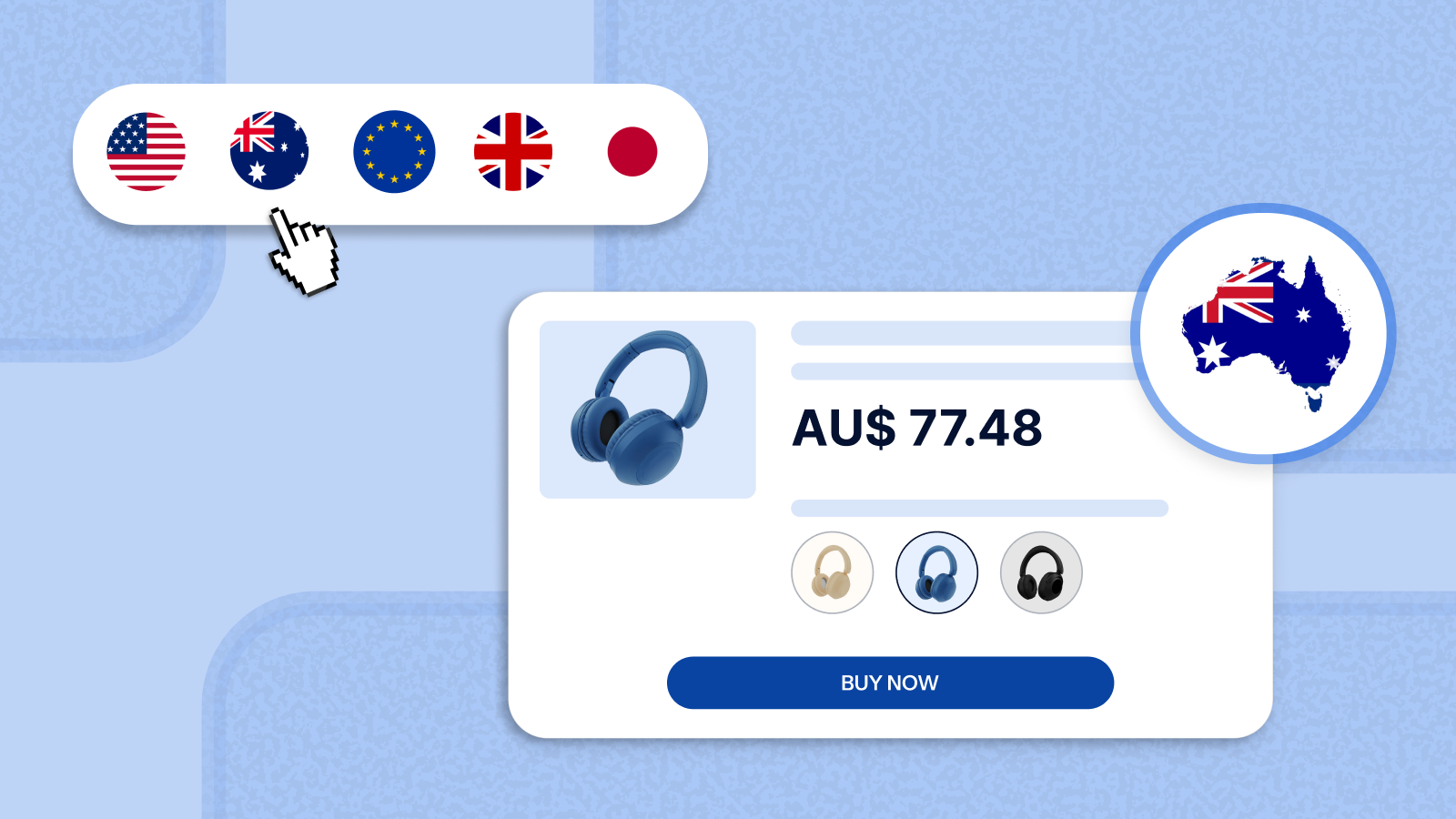

Whether it’s a buyer in the U.S. or anywhere in the world, the one human sentiment that influences a purchase the most is and will always be TRUST.
Even established cross-border operators lose sales because shoppers hesitate at the finish line. The reason isn’t pricing or product fit; it’s uncertainty.
A buyer might wonder if their card will work, whether VAT is included, or if they can return the order locally. Those doubts create friction that no amount of ad spend can fix.
Most brands translate pages and display local currencies but stop there. The real conversion triggers such as payment familiarity, duty clarity, and legal transparency remain half-localized. Those small oversights add up to major revenue loss across markets.
Localized trust is built on three levers: transparency, familiarity, and compliance. When they align, checkout becomes predictable, credible, and repeat-worthy.
Uncertainty over extra costs or payment security can derail shopping experience. That effect compounds in international transactions where expectations differ sharply:
Localized trust directly influences performance metrics — lower abandonment, fewer chargebacks, and higher lifetime value. For operators already selling globally, refining these trust cues is one of the fastest, lowest-cost ways to lift conversion without adding new markets or ad budget.
Localized trust comes from the details that make shoppers feel protected in their own market. Every high-performing cross-border brand gets these three pillars right:
Payment Messaging, Duty & Tax Transparency, and Legal Clarity.
Payment trust starts with familiar options and visible security cues. Even if a checkout technically supports global cards, customers want to see their preferred method.
Best practice: Show payment logos and security seals above the fold, not buried in footer menus. Customers are more likely to complete checkout when familiar payment badges appear early - it’s human nature; and this study by Alexander Jarvis suggests that simply displaying trust badges like accepted payment logos and secure seals can raise conversion by up to 32%.
Unexpected costs remain the #1 reason for abandonment in international checkouts. Buyers want a single, final number — not an estimate.
Best practice: Our CRO toolkit is proven to lower cart abandonment by showing total costs upfront + transparent breakdowns.
Shoppers don’t read policies — they scan for protection. Your job is to make those signals visible and compliant.
Best practice: Keep tone plain and accessible — dense legal text erodes trust. Most people will ignore it like how we ignore most T&Cs before installing an app :)
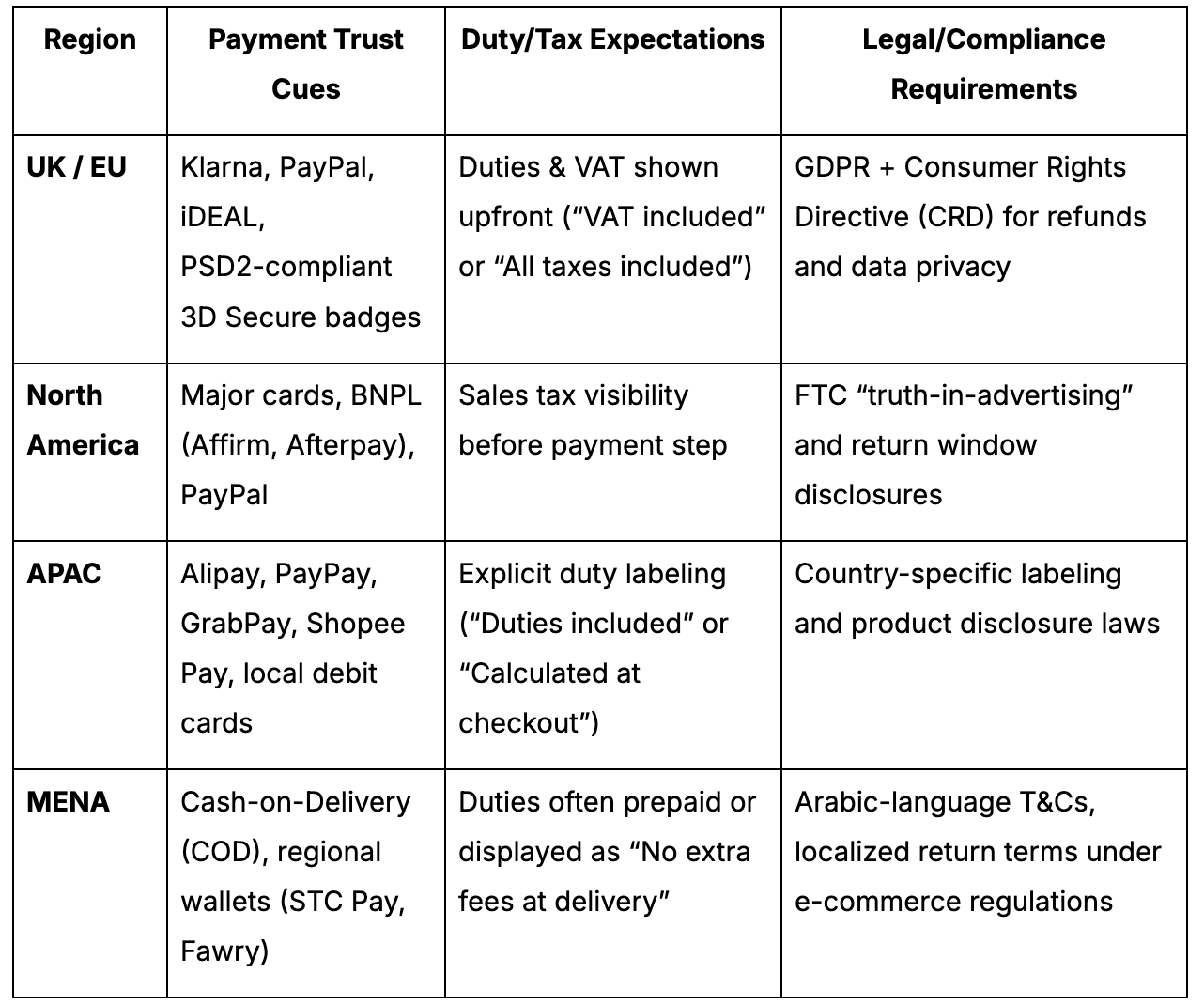
For brands already operating internationally, this table serves as a localization checklist. Each column represents a layer of conversion trust — Payment Familiarity, Cost Transparency, and Legal Clarity — that must be tuned to each region. Teams that systematically adapt all three see smoother checkouts and lower post-purchase churn.
Most global brands already know what to localize; the advantage now lies in how fast and accurately they can execute across markets. This 3-step framework helps teams pinpoint where to focus next:
Pro tip: visualize this as a trust pyramid —
Together, these create a self-reinforcing loop: transparent checkouts build confidence → confidence reduces churn → reduced churn funds further optimization.
DRMTLGY’s international scale-up required high confidence at checkout. Their conversion gains came from clearer cost visibility, localized pricing, and structured post-purchase communication.
Key outcomes:
Their gains show how localized duties, pricing, and returns messaging reduce hesitation and improve ROAS in new markets.
Obvi scaled international revenue from <5% to 30% of total sales. A major driver was clear, predictable landed cost messaging, plus reliable returns and delivery timelines.
Key outcomes:
Global trust breaks when payments, duties, or policies feel inconsistent across markets. Most brands try to fix these gaps with manual country overrides, plugins, or disjointed compliance tools — all of which get harder to maintain as SKU count and market footprint grow.
OpenBorder simplifies this by handling the core trust layers in a single, region-aware workflow:
OpenBorder’s duty and tax engine shows accurate landed cost per market — VAT-inclusive for the UK/EU, duty-calculated for APAC, and tax-aware for North America. This removes guesswork and reduces the “hidden fee” friction that drives abandonment.
Pricing, currency, and delivery estimates update automatically by destination market.
Shoppers see what they expect for their region — the exact total, their local currency, and correct delivery timelines.
OpenBorder provides local return options in supported markets, enabling brands to meet regional consumer protection norms (e.g., CRD in EU, ACL in Australia) without building new infrastructure. For buyers, this communicates immediate clarity and safety.
Instead of relying on static templates, OpenBorder ensures:
Brands operating across multiple regions don’t need dozens of manual overrides. Trust signals — payment methods, duties, returns text, legal disclaimers — stay consistent, correct, and localized as the brand expands.